
Into an Author’s Work… Annie Ernaux
In the series Into an Author’s Work…, we ask an expert on a body of work where to begin, how to move further into it — and, of course, why it’s worth the journey. In this article, Johan Lose, Programme Director at Bogforum, speaks with critic and translator Lilian Munk Rösing about the French author Annie Ernaux.
- Frontpage
- Bogforum Magasin
- Into an Author’s Work… Annie Ernaux
Annie Ernaux
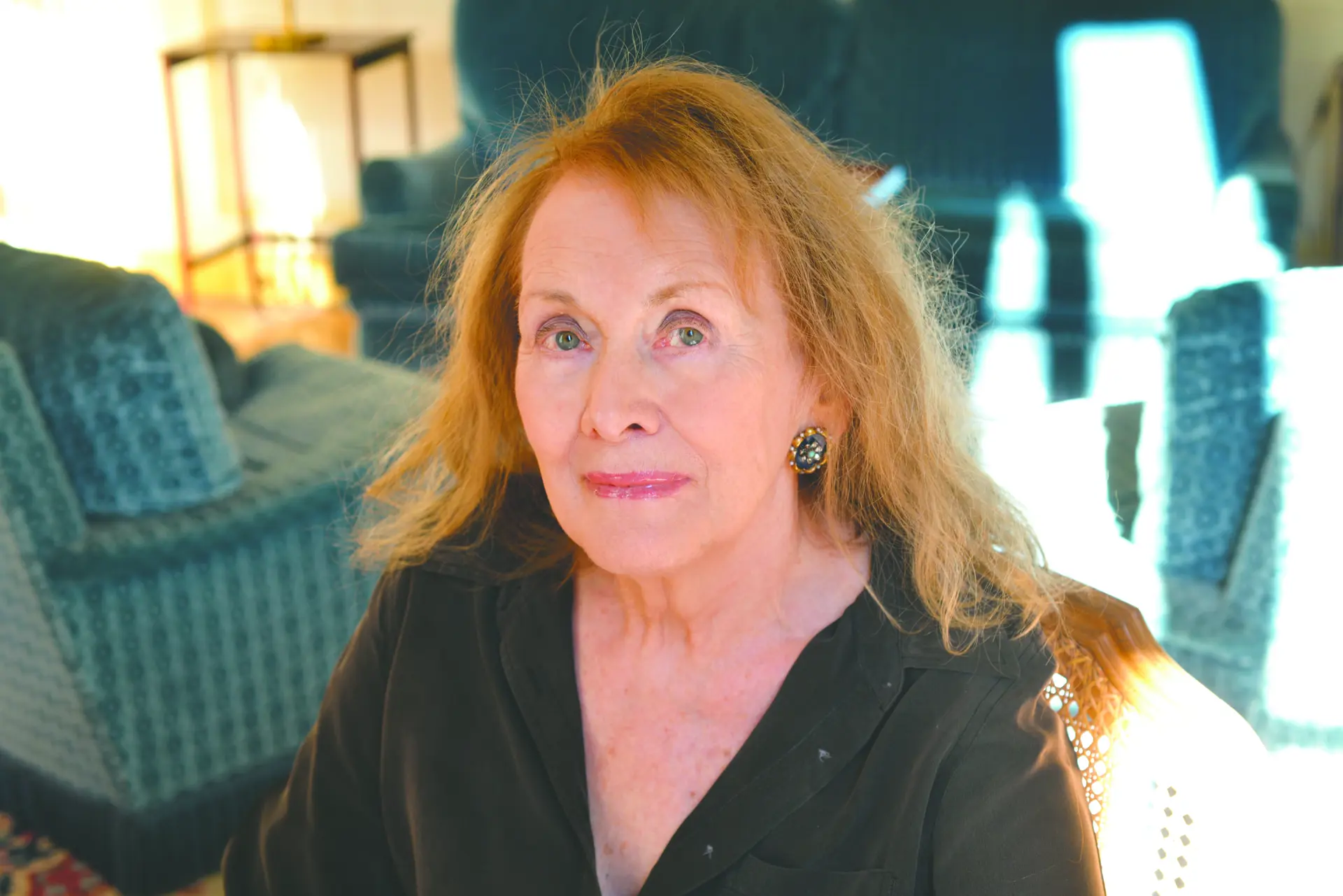
Annie Ernaux
Annie Ernaux was born in 1940 in Lillebonne, France. Since her debut novel Les Armoires vides (Cleaned Out, 1974), she has explored in her autobiographical writing how gender, language, class and consumption have shaped her life and her time. Her novel The Years, published in France in 2008, is widely regarded as her major work — and a masterpiece of modern European literature. Here, Ernaux unfolds the era and the experiences she lived through from 1940 to 2007.
“The novel has rightly been compared to Marcel Proust’s In Search of Lost Time,” wrote Bodil Skovgaard in Information, “but The Years goes beyond personal memory to tell the story of the collective that every ‘I’ is part of. Her ‘we’ is intimate and yet popular — and above all, generous.”
For the Danish translation, Lilian Munk Rösing and Birte Dahlgreen received the Blixen Prize for Translation of the Year in 2022. That same year, Ernaux was awarded the Nobel Prize in Literature for “the courage and clinical acuity with which she uncovers the roots of personal memory, alienation and collective constraints.”
Photo: Catherine Hélie © Éditions Gallimard
The first thing I’d like to ask is how you yourself discovered Ernaux.
I must admit, somewhat shamefully, that I didn’t really read Annie Ernaux until I was asked to translate her. But she has been one of my mother’s favourite authors for many years — and I translate together with my mother.
What role has it played that you translate together? I’m thinking about whether you’ve read Ernaux’s books differently, from different horizons of experience.
I think it has been interesting that we belong to two different generations. My mother is Ernaux’s own generation, and I belong to the one that follows. That has meant that when Ernaux writes her great historical epic, The Years, which unfolds from the 1940s up to 2007, we’ve been able to connect with different points in history. At the same time, I think Ernaux is a writer who truly manages to make the historically specific universally engaging. Regardless of which generation you belong to, you can enter her work and gain a great deal from it.
You and your mother also hosted Annie Ernaux when she recently visited Copenhagen. What kind of writer did you meet?
We met a very polite, very kind person. A very thoughtful person. I felt you could see that sentences are constantly working in her mind — that she is always translating what she experiences into literature. And you could also sense that she protects herself a little. There are limits to how close one is allowed to get.
Let’s turn to the books. If you were to recommend an entry point into her work — a place to begin — what would it be?
I think it depends on what kind of reader you are. If you’re drawn to the great historical epic, then you should absolutely start with The Years. I would say that The Years was my great revelation — it was where I discovered Ernaux’s greatness. But I’ve also heard from readers who find it difficult to approach because it is very formally experimental. Broadly speaking: if you’re drawn to the large historical sweep, start with The Years. If you prefer the intimate, condensed narrative, choose one of the shorter books. Among those, I think Shame is a very good place to begin. It clearly shows what she typically does — and what she does extraordinarily well: she starts from her own personal experience and unfolds what is class‑specific and time‑specific about that experience.
That makes me think of the Nobel lecture. One of the lines that circulated afterward was that Ernaux writes in order to “avenge her people.” How do you read that?
It has to do with her class background — her parents were small shopkeepers from a poor farming lineage. She understands herself as coming from the working class, from the lower class. She also experienced her parents being humiliated, or placed in situations where they didn’t master the codes of higher social classes. That experience was imprinted on her from childhood. That’s where the notion of vengeance lies — or rather the desire to give a voice to those who typically have not had access to the French literary pantheon. We also know that Denmark is a class society, even if we once held the illusion that it wasn’t. But in France, class markers — especially linguistic ones — are sharper. Speaking “beautiful” French is crucial. You can really be looked down upon if you don’t command the language in a particular way.
If one were to read only a single work — a book that somehow contains the essence of Ernaux — what would it be?
I have to say The Years. In a way, it contains all of her other novels — both those written before and after. It spans her entire lifetime. And in some passages of The Years, where Ernaux almost lists the events of a given period, you essentially get condensed versions of her other books. Those are the episodes and phases of her life that she expands into full novels elsewhere.
It’s also in The Years that she pushes her distinctive ability to view her own life in a simultaneously personal and almost external way to its furthest extent — stylistically as well. As if there were a gulf between the writer who writes and the person who lived what is being written. You see this too in A Girl’s Story, Happening and Simple Passion. “Who was the person who experienced this?” she seems to ask…
Yes, you could say she approaches her former self in a very dissecting way. She has described it as “writing with a scalpel.” She also refers to The Years as an impersonal autobiography. It’s important to note that she writes “we” in The Years, but she also writes “she.” One of the keys to understanding The Years is recognising that it has these two tracks: one in which collective history is told through a “we” — her generation with its class‑ and era‑specific experiences — and another in which “she” allows space for what cannot fully be included in the collective scene. Thoughts formed in solitude. Everything that, broadly speaking, concerns death and desire — including Ernaux’s own desire to write. That double movement is one of the novel’s small strokes of genius.
If we stay with the relationship between the collective and the personal: if one reads one of the short books — say The Young Man, My Father, A Woman — and then reads the Nobel lecture, one might wonder why Ernaux calls her Nobel Prize a “collective victory.” One could also see it as a personal honour, awarded to a very personal body of work. Why do you think she speaks of a collective victory?
I think that even in the books where personal experience dominates — where she writes in the first person — she is always interested in seeing herself as part of a particular class, a particular era. Even when she writes about a deeply personal erotic relationship, such as the affair with the Russian diplomat in Simple Passion and Getting Lost, it also becomes a story about the fantasies an intellectual woman of her generation had about the Soviet Union and Russia at that time. She constantly uses her own experience as a mirror for something larger and collective.
Are there any works in her oeuvre that fall outside the typical Ernaux — something atypical or slightly strange?
There are some that haven’t yet been translated into Danish, and there’s one I’d very much like to see translated: Look at the Lights, My Love (Regarde les lumières mon amour, 2014). It is, quite simply, a diary of her daily grocery shopping in the hypermarket in the Paris suburb where she lives. Exploring everyday, banal actions is something she also does elsewhere — not least in The Years. But here she does it so systematically that the entire book consists of reportage‑like diary entries from her supermarket visits. You could call that strange — but it’s also incredibly fascinating.
That’s new to me — it sounds almost Georges Perec‑like. Which leads me to ask: is there a particular work that has had special personal significance for you?
In a way, that’s what’s special about her for me: in every book I begin, there is something I connect with deeply on a personal level. Again, it’s hard not to point to The Years, which gave me this overwhelming sense of how one can hold both collective social experience and personal existential experience in a single gesture. It gave me an understanding of what it means to be part of a time. She describes a specific time in a specific place, but it’s easy to translate that specificity into something recognisable from one’s own life. I don’t find it difficult to transpose the French references — books, pop songs, TV programmes — into equivalent Danish ones from my own generation. Ernaux really gets at the core of what it means to belong to a time.
Finally, can you recommend a work that might expand one’s reading of Ernaux — something to read alongside her?
You mentioned Georges Perec yourself. His novel Things is interesting because it does something similar to what Ernaux does in The Years. The major difference is that Perec writes “they” about the group he describes, whereas Ernaux writes “we.” That’s one of the strengths of The Years: she doesn’t exclude herself from what she portrays. When she describes the consumer’s foolish joy in shopping, she’s not pointing fingers at others — she includes herself.
You can read more about The Years here:
https://verdenoversat.dk/2021-annie-ernaux-aarene/
The Nobel lecture can be read here:
Annie Ernaux Nobel Lecture, Gads Forlag (Issuu)
Most recently published in Danish:
Annie Ernaux – The Young Man, translated by Lilian Munk Rösing and Birte Dahlgreen (Gads Forlag)
Annie Ernaux – Writing as a Knife, conversations with Frédéric‑Yves Jeannet, translated by Christel Pedersen (Forlaget Etcetera)